



- Customs Barriers Cannot Sustainably Boost Economic Growth
- U.S. and EU Protectionism – A Blessing or a Threat to Small Economies?
Renowned American economist Steve Hanke, a professor of applied economics at Johns Hopkins University, in an interview for portal BANKAR, discusses U.S. economic policy, protectionism, the impact of trade tensions between major powers on small economies like Montenegro, and potential strategies for coping with global economic pressures.
Hanke emphasizes that tariffs and trade restrictions cannot foster sustainable economic growth in the long run; instead, they lead to inefficiencies and resource misallocation. While protectionism in large economies can harm global trade, it paradoxically may benefit smaller countries that are not directly affected by tariffs.
As a solution for countries like Montenegro, Hanke suggests unilateral free trade, following the example of Hong Kong, to ensure economic growth and stability.
-How would you assess the latest economic policy of the United States regarding tariffs and trade restrictions? Are they sustainable in the long run?
The idea that President Trump’s proposed policies will significantly impact inflation is fanciful. Inflation is fundamentally a monetary phenomenon. Significant changes in inflation are always and everywhere preceded by significant changes in the stock of money. The immediate, first-round effects of tariffs will be a reduction in the purchasing power of Americans, distortions in the U.S. economy, and lower production and economic growth compared to what they would have been in the absence of tariffs. Over time, tariffs and trade restrictions create inefficiencies and misallocations of resources, making them unsustainable as a long-term policy for economic growth.


-The Trump administration often used tariffs as an economic tool. Do you think the U.S. will continue with a protectionist policy in the future, regardless of who is president?
As a mercantilist, President Trump views trade deficits as inherently negative and attributes them to the policies of other countries. Contrary to what the mercantilists believe, the negative trade balance in the U.S. is not a ‘problem,’ nor is it caused by foreigners engaging in unfair trade practices. By definition, a country’s trade balance is governed entirely by the gap between its domestic saving and domestic investment. If a country’s domestic saving is greater than its domestic investment, like China’s, it will register a trade surplus. Likewise, if a country has a savings deficiency, like the United States, it will register a trade deficit. The United States’ negative trade balance, which the country has registered every year since 1975, is ‘made in the USA,’ a result of its savings deficiency. To view the trade balance correctly, the focus should be on the domestic economy.
Both the public and private sector contribute to the trade balance through their respective savings-investment gaps. The total trade balance is the sum of these two gaps. In the United States, the private sector actually generates a savings surplus—that is to say, private savings exceed private domestic investment—so the private sector gap acts to reduce America’s trade deficit. By contrast, the public sector generates a cumulative savings deficiency—that is to say, government domestic investment exceeds government savings, resulting in fiscal deficits—that is almost twice the size of the private sector surplus. The private sector surplus is overwhelmed by the public sector deficit. Clearly, then, the U.S. trade deficit is driven by the government’s (federal, plus state and local) fiscal deficits. The straightforward implication of this analysis is that President Trump can bully countries he identifies as unfair traders and can impose all the restrictions on trading partners that his heart desires, but it won’t change the trade balance. If Mr. Trump was truly interested in eliminating the trade deficit, he could easily do it by balancing the federal government’s budget.

The continuation of protectionist policies in the U.S. will largely depend on the stance of the sitting president. Only if a future president embraces a mercantilist outlook, will the U.S. continue its protectionist measures.

-How do increased tariffs and trade tensions between major economies, such as the U.S. and China, impact small economies like Montenegro and the broader Balkans?
Ironically, trade tensions and increased tariffs between major economies like the U.S. and China can benefit smaller economies. Since U.S. tariffs will not alter the overall U.S. trade deficit, the imposition of tariffs on one country, such as China, will result in the U.S. trade deficit being filled by smaller countries that have not been targetted tariffs. For example, tariffs imposed on China greatly redirected economic activity to Vietnam, where exports to the United States are surging. Therefore, protectionist policies amongst the larger countries can be a blessing in disguise for smaller countries like Montenegro and others in the Balkans.
-Do you believe that the EU also uses tariffs as an instrument of economic control over the Western Balkans? How should small countries like Montenegro respond to such pressures?
Yes, the EU does use tariffs as an economic tool to exert influence over the Western Balkans. In response to such pressures, Montenegro and other small economies should adopt a strategy of unilateral free trade, similar to the approach taken by Hong Kong.
- Steve Hanke is a Professor of Applied Economics at the Johns Hopkins University. He served as a State Counselor and Chief Advisor to President Milo Đukanović from 1999 to 2003, when he was the architect of Montenegro’s “dollarization” — Montenegro’s switch from the Yugoslav dinar to the German mark.
“Marked” Man – targeted for the Reforms He Implemented
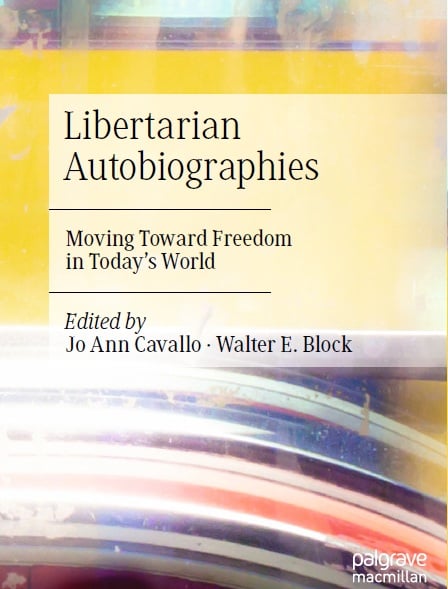
- In the book Autobiographies of Libertarians, in the section dedicated to Professor Hanke, A Life Among the “Econ”, a particularly interesting part for our region is his career in these areas. Thanks to the courtesy of Professor Hanke, we present this biography to our readers on this link.