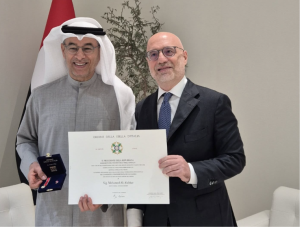




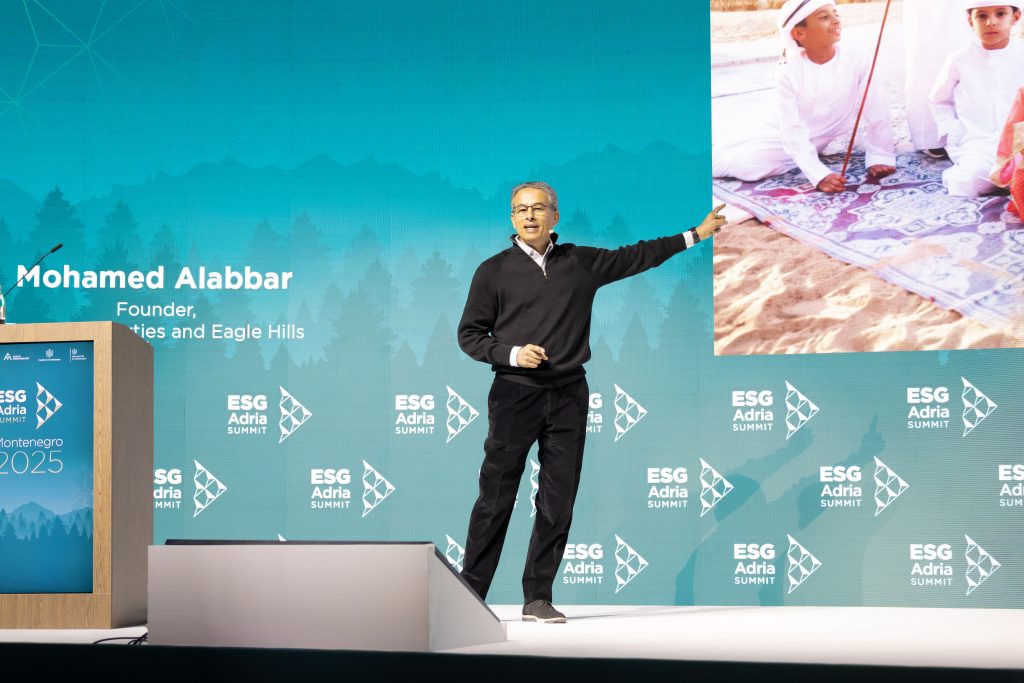
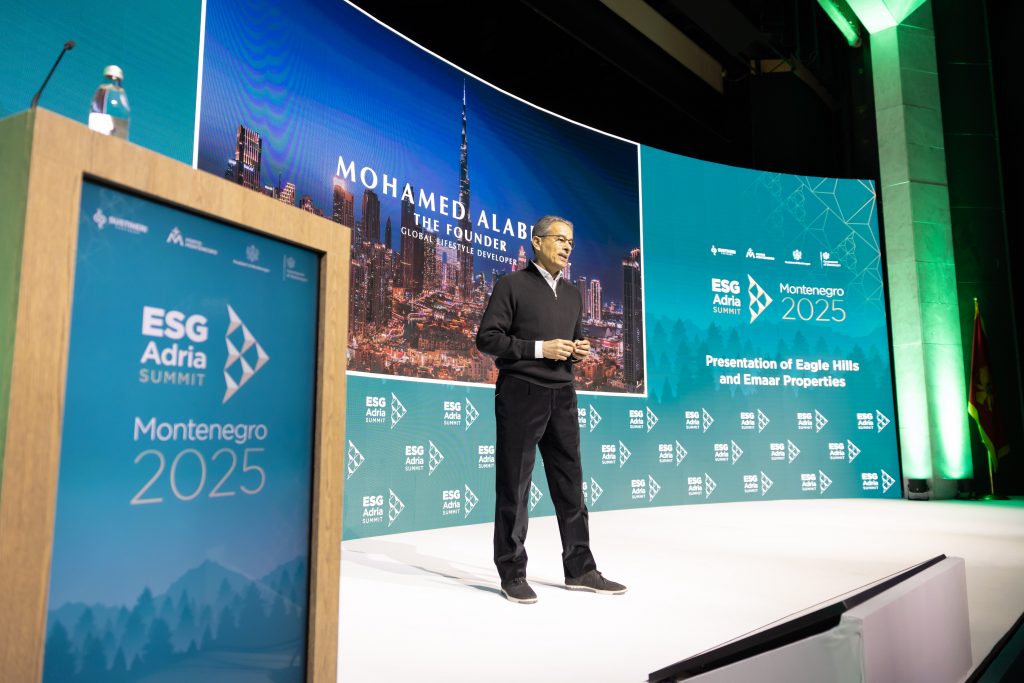
One of the most influential Arab entrepreneurs of our time, founder and chairman of Eagle Hills, Mohamed Alabbar, delivered a powerful and inspiring speech at the ESG Summit in Tivat, in Porto Montenegro, placing the focus not on buildings, but on people, nature, and communities. His message was clear: “I am in the business of making life joyful – and that means caring for children, mothers, rivers, trees, local artisans, cultural heritage, and what we leave for future generations.”
In light of his company’s growing interest in investing in Montenegro — particularly in Ulcinj — Alabbar addressed the audience with the desire to dispel the stereotype that his work is limited to the construction of luxury properties. On the contrary, he spoke as someone whose vision centers on people and the environment.
From Nothing to Global Vision: A Philosophy of Gratitude
Alabbar reflected on his humble beginnings. “I worked in a small bank. Then I moved to a small investment company, and eventually, the government called. I was 36 when I first met with the Prime Minister. In just two days, I raised 300 million dollars,” he said. “God has been good to me. I’ve learned that nothing is impossible, but also that success means nothing if you forget who and what helped you achieve it.”
He shared how, in the beginning, he thought he was just building small structures — until he realized he was actually shaping economies, cultures, and societies. “I came to understand that I’m not in the construction business, but in the business of progress.”
Today, after nearly three decades of work, he is most proud of his family: “I have 12 grandchildren, and a 13th on the way. That’s my greatest project. That’s my greatest wealth.”
Communities, Not Just Square Footage
In one of the most emotional moments of his speech, Alabbar said: “With every project I begin, I ask myself: will my mother be proud? Will my children and grandchildren say — our grandfather left something good behind?”


He emphasized that he never begins a project thinking about profit. “When I come to a city, I want to blend in. I’m Arab. I won’t build a tower in Ulcinj that looks like it belongs in Dubai. People need to know where they are. If I’m in Montenegro, the city should look like Montenegro — it should carry the local soul.”
Sustainability as a Foundation
Eagle Hills operates in 18 countries, and Alabbar insists that every project must have a sustainable component. “Do you know how many trees we’ve planted? 400,000. We’ve developed 28 kilometers of beaches, over 400 children’s playgrounds, 120 wellness centers, and 90 hotels. Our properties include a service fee to ensure the complex stays in excellent condition. We’ve entered a completely different business — the business of maintaining quality of life.”
He also spoke about buildings designed to be fully recyclable, green areas, flowers, bike lanes, solar energy, and water filtration systems. “We build cities where people are happy because we don’t bury them in concrete — we give them space to live.”
Social Responsibility and Solidarity
“For every three homes we build in Egypt, we give one away to a family in need. In Albania, before we even signed a contract, we planted 2,000 trees and provided earthquake relief. In Durrës, we haven’t earned anything yet, but we continue working because we believe good deeds will pay off.”

He also emphasized that they always allocate funding for young entrepreneurs. “If a young person makes the best leather shoes or has a great restaurant idea, we rent the space to them, and they pay us once they start earning. We give them the capital to launch their business. We want small businesses to drive development, because when we build a city, we’re not just building homes — we’re building economies and dignity.”
Transparency Above All
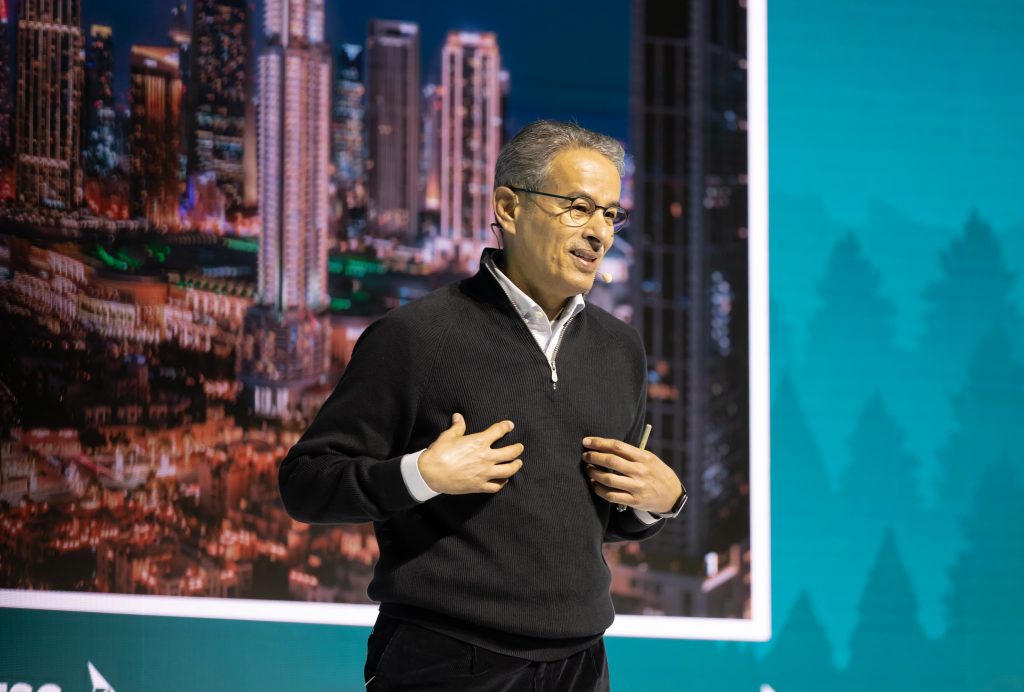
Alabbar proudly pointed out that his company regularly publishes financial reports, as it is a public enterprise. “For the past 29 years, I’ve received quarterly cost reports. We have nothing to hide. When people talk about ‘transparency’ — we live it. I believe the UAE has become more transparent than the EU or the US because we chose transparency as a value.”
Experience from Dubai – Turning Crisis into Opportunity
He recalled the opening of Dubai Mall in 2008, during the peak of the global financial crisis. No one wanted to rent retail space. “I said — let’s wait. Today, we have 350,000 visitors every day.”
When Dubai was hit last year by the heaviest rainfall in 80 years, over 120,000 homes were damaged. “The warranty was for one year. Everyone asked what we would do. My mother said: take care of all of them. And we did.”
Solidarity, Even Where We Don’t Operate
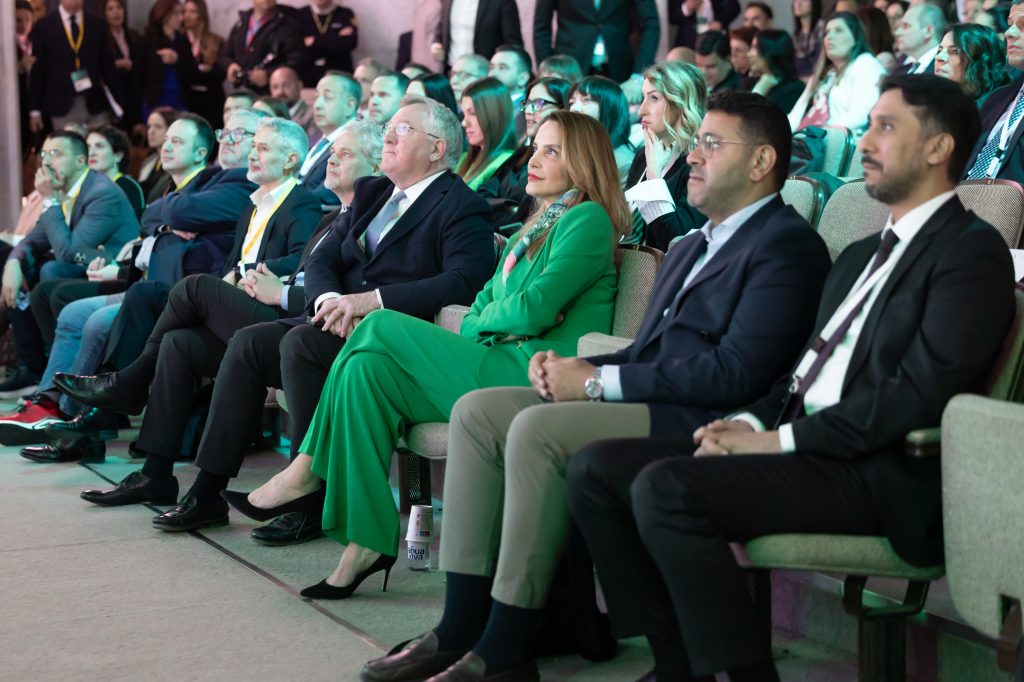
“When the tsunami struck Indonesia, I remembered the tent I lived in as a child. We don’t operate there — but we helped. When babies from Gaza arrived without parents, we were there. In Egypt, we’re building 2,000 homes for the most vulnerable. In the Emirates,there is a $60 million program to support youth.”
In Montenegro — Development Measured by Citizens’ Needs
Speaking about potential projects in Montenegro, especially in Ulcinj, Alabbar promised that if given the opportunity, he would build in full respect of local norms and traditions. “For every two or three buildings we develop, one will be given free of charge — for social housing. When we finish a project, we won’t lease commercial spaces to global chains — we’ll offer them to local Montenegrin entrepreneurs. We want the people of Ulcinj to earn from the project, to grow alongside it.”
Conclusion: “A Guest Must pay respect”
“Wherever I work, I own a home — because I want to be part of the community, not a visitor. A guest must be honourable. You must hold me accountable. If we don’t follow the rules — don’t let us work. If Montenegro says no — we will respect that. But if you say yes — I promise we will work with heart, with knowledge, and with the utmost respect.”
Mohamed Alabbar left no doubt — he doesn’t just build walls. He builds trust. He builds economies. And perhaps most importantly — he builds hope.