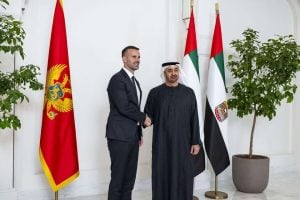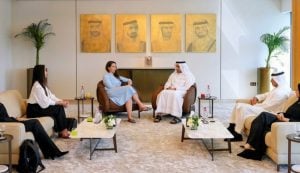




The Montenegrin parliament adopted the Agreement between the governments of Montenegro and the United Arab Emirates on economic cooperation tonight. 60 MPs voted, 50 in favor, 10 against. This agreement was not disputed in public as an agreement relating to cooperation in tourism and real estate development. A draft law on the ratification of the Agreement on Cooperation in the Field of Tourism and Real Estate Development with the UAE was also adopted. 46 MPs voted for this agreement, ten against, and four abstained. DPS MPs did not attend the vote. Although the Democratic People’s Party (DNP) is part of the ruling coalition, none of its eight proposed amendments to the draft law on the ratification of the Agreement between Montenegro and the United Arab Emirates were adopted, as they failed to receive the necessary majority in Parliament.
A heated debate and opposing views marked the Third Session of the First Regular Sitting of the year, during which MPs discussed the agreements with the UAE.
The Montenegrin Parliament was reviewing two agreements with the United Arab Emirates (UAE) concerning economic cooperation, tourism, and real estate development. These agreements have sparked deep divisions among MPs, and there is a heated debate in Montenegro’s Parliament, as MPs clashed over two proposed laws ratifying agreements with the UAE.
The session, which began an hour later than scheduled, revealed deep divisions within the country’s political landscape, pitting promises of vast investment and economic growth against fears of non-transparent deals and national land being effectively “gifted away.”
The focal point of the debate was two draft laws: one on ratifying the Agreement on Economic Cooperation between the Government of Montenegro and the UAE, and another on cooperation in the field of tourism. Both agreements were presented as significant steps toward attracting investment and developing infrastructure, particularly on Montenegro’s southern coast.
Supporters of the agreements—including MPs from the Europe Now Movement (PES) and the New Serbian Democracy (NSD)—believe this is an opportunity to attract credible investors and accelerate economic development, especially in underdeveloped regions.
Criticism and Concerns
Opposition parties, including the Democratic Party of Socialists (DPS) and the Civic Movement URA, have raised concerns about a lack of transparency, potential legal violations, and threats to national sovereignty. One key issue is the fear of expropriation of private property without adequate public consultation.
The Mayor of Ulcinj, Genci Nimanbegu, strongly opposes the agreements, claiming they violate the rights of the local community and are being pushed forward without their consent.
Minister: “Nothing Will Be Built Against the Will of Citizens”
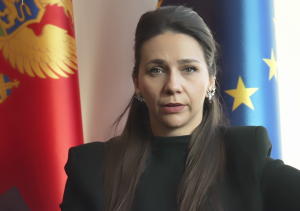
Opening the session, Minister of Public Works Majda Adžović assured the Parliament and the public that no development would proceed without the consent of local communities.
“We are committed to respecting the will of Montenegro’s citizens,” Adžović said, aiming to ease public concerns over the potential privatization or overdevelopment of ecologically sensitive areas like the Velika Plaža (Long Beach) in Ulcinj.


Support from the Ruling Party: Billions in Investment and Jobs for Youth
Jelena Nedović, an MP from the ruling “Europe Now” Movement (PES), vigorously defended the agreements, calling them a gateway to investments worth up to €30 billion. She emphasized that no land would be sold, and that projects would bring new jobs and opportunities for young people, especially in underdeveloped municipalities.
“There will be no forced construction, and the state property is not being sold,” Nedović stated. “Municipalities that fail to recognize this potential will be left out, and they will have to explain to their citizens why they remain poor while others prosper.”
DPS Criticizes Secrecy and Constitutionality
However, the opposition Democratic Party of Socialists (DPS) raised sharp objections. MP Nikola Rakočević accused the government of damaging Montenegro’s reputation among international investors and violating constitutional processes.
“You’re not just bringing in investments; you’re making deals behind closed doors,” Rakočević said. “This is a state-to-state agreement, not a private contract. Yet you’ve failed to engage institutions or provide transparency.” He also criticized Prime Minister Milojko Spajić, alleging that the government’s dealings, particularly concerning the leasing of Velika Plaža, have created reputational issues for Emirati investor Mohamed Alabbar.
NSD and DNP Welcome the Agreement
In contrast, MPs from the New Serb Democracy (NSD) and the Democratic People’s Party (DNP) welcomed the agreements, highlighting the need for foreign capital and expertise. MP Goran Đurović of the NSD stated that the agreements comply with Montenegro’s EU accession framework and could bolster the country’s economic resilience.
“These agreements are aligned with the Stabilization and Association Agreement with the EU. No clause is against Montenegro’s interests,” Đurović insisted.

Jelena Kljajević of the DNP argued that this is not about selling national assets but about accelerating bilateral cooperation.
Abazović: “This is Not an Investment—This is a Gift of a National Treasure”
Former Prime Minister and MP from the United Reform Action (URA), Dritan Abazović, fiercely opposed the ratification. He argued that the agreements lack accountability and transparency, describing them as a “gift” of the country’s most valuable land assets to foreign powers.
“This is not about selling or leasing land—it’s about giving away our national jewels. There is deception here, and people are being manipulated,” Abazović said, claiming that the government was rushing the process due to possible external pressures. “You’ve created a massive reputational problem not just for Alabbar, but for the UAE,” he added.
HGI, Albanians, and Democrats Weigh In
Andrijan Vuksanović from the Croatian Civic Initiative (HGI) said he would not vote in favor of the agreements. Ilir Čapuni of the Albanian Alliance questioned the government’s portrayal of Ulcinj and Bar as impoverished.
“Ulcinj generates significant income from corporate taxes, VAT, and coastal fees. The notion that it’s poor is misleading,” Čapuni noted.
Meanwhile, MP Momčilo Leković from the Democrats acknowledged the need for investment but said Montenegro’s reaction to foreign investors remains overly dramatic compared to other countries in the region.
Transparency and Green Light Promised
PES MP Tonći Janović argued that a state has the right to provide investors with legal certainty, and that such agreements should be seen as diplomatic opportunities rather than rushed deals. “This is not some last-minute draft done in 48 hours. It’s a diplomatic framework for multiple projects across sectors,” Janović asserted.
PES MP Branka Marković also pointed to broader economic cooperation beyond tourism. “All contracts will have to be ratified by Parliament. The entire process will be transparent,” Marković promised.
Second Agreement: Focus on Tourism
Following a break, the debate resumed with discussion of the second agreement, focused on cooperation in the tourism and real estate sectors.
Minister Adžović reiterated that most municipalities support the investments. She questioned whether the opposition’s goal was to undermine all potential partnerships with the UAE.
“Are we trying to make it impossible to cooperate with the UAE?” she asked rhetorically.
- The session is still ongoing.