


Tivat is the city with the highest average salary in Montenegro, and I often say that in Tivat, the only people not working are those who choose not to. For some time now, our workforce has been arriving from Asian and African countries. More than 50 nationalities live and work in the city. Unemployment is by no means our problem; rather, we are facing a labor shortage. As we move closer to the EU, this issue will become even more pronounced, especially in the service and craft sectors.
Investments are welcome, as are all potential investors, but their visions and plans must align with the interests of the local residents and the cities where the investment is being implemented. Without interaction with the local government, residents, and the community as a whole, an investment becomes meaningless and loses its positive impact.
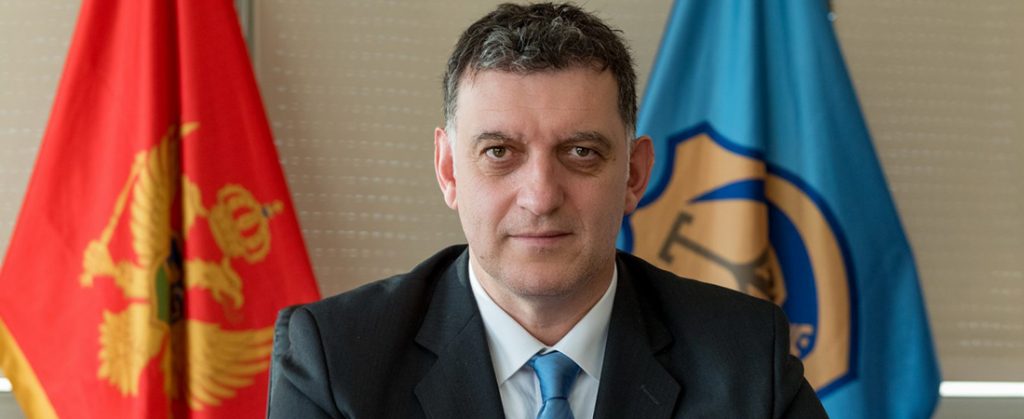
This was stated in an interview with Pobjeda by the President of the Municipality of Tivat, Željko Komnenović, while commenting on the reservations expressed by the Municipality of Ulcinj regarding plans for the development of Velika Plaža (Long Beach).
He added that the values and standards brought to Tivat by Porto Montenegro are unquestionable.
POBJEDA: What are the key factors that enabled the Municipality of Tivat’s 2025 budget to reach a record €33 million?
KOMNENOVIĆ: For years now, the Municipality of Tivat has had a stable budget with a tendency to grow annually. In 2024, we recorded revenues of €31.46 million, which was 107% of the planned amount. Own-source revenues amounted to nearly €20 million, including €8.5 million from property tax, €2.8 million from real estate transaction tax, and €4.3 million from utility fees.
The people of Tivat are known for being responsible and regular taxpayers. This allows us to create realistic projections and direct the funds where they are most needed. At this moment, that is city infrastructure: transportation, water supply and sewage systems, education, sports…
POBJEDA: Which sectors will receive the largest portion of the budget and why?
KOMNENOVIĆ: In 2025, the Municipality of Tivat will invest over €22 million in designing, constructing, and creating other preconditions for new communal infrastructure and public facilities. This is outlined in the Spatial Planning Program for 2025. The capital budget alone amounts to €16 million.
Over €9 million will be directed toward strengthening the sewage and water supply systems. A significant part of these works is financed by the Municipality itself, while about €7 million (of a total €28 million investment) is financed through a loan from the KfW Bank. An additional €2 million is allocated for resolving numerous property issues that accompany the implementation of capital projects.
We will invest €4.46 million in the construction of local roads in preparation for the development of the boulevard through Tivat.
We also expect continued investment in the Belani coastal promenade (€800,000). Around €400,000 is allocated for the establishment of anchor points and a marina for municipal moorings in Seljanovo. Plans include the construction of a multifunctional sports hall in Donja Lastva and a balloon sports dome near the Health Center. For restoration work on the Buća-Luković tower and landscaping of the surrounding courtyard, €156,000 has been planned.
POBJEDA: How do you plan to ensure transparency in the spending of the budget, especially considering such a high amount?
KOMNENOVIĆ: There are legal mechanisms and clearly defined operational procedures, which we follow without exception. Through the budget, the Public Procurement Plan, the Spatial Planning Program, and other acts adopted by the local government, the purpose of every euro from the city treasury is clearly outlined. It is extremely important for us to implement as much of the plan as possible, especially considering that a large portion of the budget is directed toward capital projects that are directly linked to improving citizens’ quality of life.


POBJEDA: What is the current status of the Jaz–Tivat boulevard construction, and when can citizens expect its completion?
KOMNENOVIĆ: The section from Tivat Airport to the roundabout toward Kotor has just been completed. We are closely monitoring this project led by the national Transport Administration, as it is of great importance for road traffic in this part of the Montenegrin coast. The deadline for completion is January 2026. By the end of this month, the 5.5 km stretch from the airport to the turnoff for Bigova is expected to be completed. Work will continue during the summer. Many people forget that the base of the future boulevard will also include new water supply pipelines for this coastal area.
POBJEDA: Are there any challenges in implementing this project, and how are you addressing them?
KOMNENOVIĆ: It’s important for us to ensure proper access to Tivat Airport. The next step is the construction of the section from the airport to the roundabout in Gradiošnica. We call this the “zero phase,” and it marks the beginning of the future boulevard through Tivat. Traffic toward Budva is currently facing difficulties, and it’s quite clear that construction on this section will extend into the upcoming tourist season. We must be patient—without continued investment in road infrastructure, there can be no development or progress.
POBJEDA: What are the most important development projects currently underway or planned in Tivat?
KOMNENOVIĆ: We are currently working on the water supply and sewage network in Radovići, while also strengthening the system in other parts of the city. We are connecting the Mažina and Pod Kuk reservoirs via a new pipeline. There are also plans for sewage system upgrades in Donja Lastva. These are multi-million-euro investments—not always visible, but they result in record-low water losses compared to other Montenegrin municipalities.
In cooperation with the Ministry of Education, Science, and Innovation, we’re seeing significant investments in schools. In a few months, a new school will open in Radovići. For the first time in decades, children in this part of the city will attend school and kindergarten in permanent, solid buildings. We are also on the verge of building a new school in Donja Lastva, replacing old prefabricated structures from the 1980s with a modern facility equipped with all necessary amenities.
Just a few days ago, I visited the premises of the Shopping Center in Seljanovo with Minister Jakšić-Stojanović. We’ve jointly invested over half a million euros to organize temporary classrooms and daycare there during the construction of the Donja Lastva school. I’m eagerly awaiting the announcement of a new school project in Župa as well.

Work is ongoing on the Belani promenade. In the coming days, we expect to complete work on the S6 road, and then the road from Ruljine to GornjaLastva. Building roads in the upper zones of the city is a prerequisite for starting construction of the boulevard through Tivat, which is strategically vital for our future development.
Pipeline installation toward the island of Our Lady of Mercy is proceeding as planned. The Investment Directorate is working on many fronts, and the results are visible. The current works on the Gradiošnica–Tivat City Center power line are also important. Last summer, we faced issues with stable and regular electricity supply. CEDIS will soon activate this new line, and new power cables—crucial for a rapidly growing Tivat—will also be placed along the boulevard route.
POBJEDA: How do these projects contribute to local employment and improving quality of life?
KOMNENOVIĆ: Tivat is the city with the highest average salary in Montenegro, and as I often say, only those who don’t want to work are unemployed here. For some time now, our workforce has been coming from Asian and African countries. More than 50 nationalities live and work in our city. Our challenge isn’t unemployment, but rather a labor shortage—an issue that will become more pronounced as we move closer to EU accession, especially in the service and craft sectors.
Two major international projects—Porto Montenegro and Luštica Bay—have set extremely high infrastructure standards. The local government is working to ensure that the city’s infrastructure keeps pace and that new amenities continue to be developed for young people, children, and adults. We’re seeing multi-million-euro investments in sports and culture. We also support state sectors such as healthcare, education, and public safety because it’s crucial for us that all city services operate effectively.
POBJEDA: Are there plans to introduce new green or digital initiatives as part of the municipality’s development?
KOMNENOVIĆ: We were pioneers in launching a regular maritime transport line, thanks to a donation from Luštica Bay and the private company operating the service. Today, electric boats can take you from Pine to the Airport, Krašići, or Radovići. Through EU-funded projects, we also acquired a mini electric bus, and the plan is to connect the Airport with the city center using it.
We managed to remove all billboards from municipal territory, freeing up public space. This initiative earned us recognition from the Green Destinations organization. Still, we need to work more comprehensively on environmental and sustainability projects, particularly in waste management.
We are committed to the smart city concept and are developing a loyalty platform that will be especially useful for Tivat’s citizens and visitors alike. We are also planning to launch a new municipal website and refresh the “System 48” platform.
POBJEDA: What has been achieved so far from the Strategic Development Plan of Tivat until 2029?
KOMNENOVIĆ: The Strategic Plan, adopted in mid-2024, includes 71 project tasks. In its development, we aimed for a realistic and achievable framework, while clearly defining future development directions. We are already well into the implementation of the 2025 plan, which includes 22 projects.
In addition to the investments I’ve already mentioned, I’d highlight our work on establishing an anchoring management system, constructing a balloon sports hall near the Health Center, and digitalizing the local government. We recently won a national competition with a conceptual design for a future open-air market.
POBJEDA: How do you view the economic agreement between Montenegro and the UAE, especially considering the success of the Porto Montenegro project?
KOMNENOVIĆ: The values and standards brought to Tivat by Porto Montenegro are indisputable. No one wants to, nor can, deny that. As the local authority, we have always tried to protect the interests of the residents and the city within the context of the project, without diminishing the importance and potential of the investor.
Today, I can say we have the best possible relationship with them, even though we still face inherited issues stemming from past ad hoc decisions that continue to create administrative and legal hurdles.
POBJEDA: In that context, how do you see the reservations expressed by the Municipality of Ulcinj regarding the agreement with the UAE?
KOMNENOVIĆ: Investments are welcome, as are all potential investors, but their visions and plans must align with the interests of the local residents and the cities in which the investments are realized. Without interaction with the local government, residents, and the broader community, an investment becomes meaningless and loses its positive impact.
POBJEDA: You condemned certain statements by SPC priests denying the existence of Croats in Boka. Do such statements from you help maintain traditionally good interethnic relations in the region?
KOMNENOVIĆ: That’s correct, and I stand by everything I’ve previously said on the matter. Boka is a multiethnic and multiconfessional region where we must foster tolerance, mutual respect, and understanding. Only through such values can we continue building a community in which everyone has equal rights and a shared sense of belonging.
(Pobjeda.me)