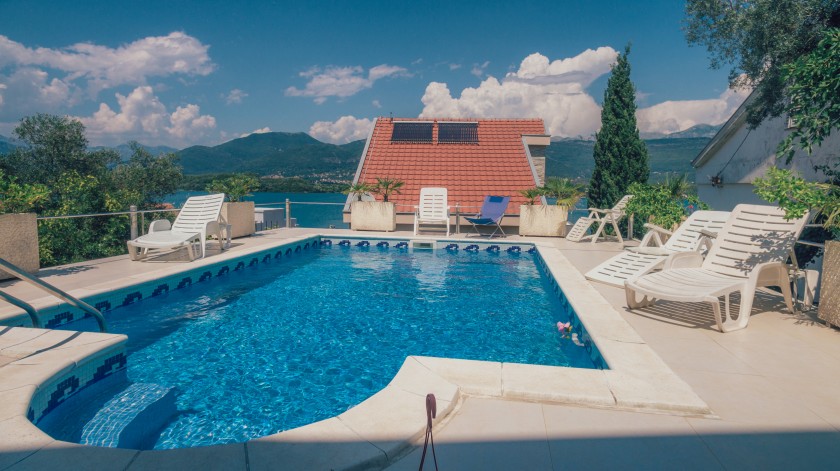




Montenegro has recorded a strong influx of millionaires over the past decade, confirmed earlier this summer by the Henley & Partners Wealth Migration Report. The research showed that the number of millionaires in the country has risen by an astonishing 124 percent in ten years. Following this story, the portal Bankar investigates the main advantages that position Montenegro as an investment destination.
A business environment ripe for investment
According to Henley & Partners, the reasons behind this historic influx of millionaires to Montenegro include: the citizenship-by-investment program (2019–2022), low tax rates, access to the Adriatic Sea, as well as the prospect of imminent EU accession.
IT expert and former senior manager at Google Inc., Bradley Horowitz, told Bankar that Montenegro has all the prerequisites to become an attractive destination for foreign investors. In his words, the country is showing clear progress in developing its market and business climate, with a maturing economic environment and opportunities that can be nurtured both in the short and long term.

“It is particularly encouraging to see the existence of programs that promote innovation and early-stage investment, as they offer investors the chance to enter the market while it is still expanding. Montenegro has the talent, determination, and all the right conditions to build a significant market and should be ‘on the radar’ of investors worldwide,” Horowitz emphasizes.
He adds that Montenegro’s additional appeal lies in its natural beauty, hospitality, and the warmth of its people, noting that it is an ideal place to live and work—an increasingly important factor in attracting international capital and skilled professionals.
Advantages for high-tech companies

This view is shared by Dr. Frederik Bruwer, president and CEO of Azoteq, who argues that Montenegro is an attractive location for establishing, for example, a high-tech company.

“The short-term benefit lies in the costs, which are significantly lower than in the more developed countries of Western Europe and the U.S. At the same time, there is a large pool of educated and talented graduates from the University of Montenegro, which is a very positive factor. For Azoteq’s operations, we have particularly benefited from candidates from the master’s program at the Faculty of Electrical Engineering, with whom we have also established direct cooperation,” Bruwer notes.
In addition, he explains, his company uses support from institutions such as Montenegro’s Innovation Fund and the Science and Technology Park, where they maintain a local office. Medium-term benefits stem from accelerated reforms implemented by the government to make Montenegro more business-friendly, as well as from its relatively central position in Europe—flights east and west are relatively short, although there are still not enough direct connections.
“In the long run, there is also the advantage that a company investing here can have a real impact thanks to the small population size. This means that while a medium-sized company cannot realistically influence institutions in countries like Germany or the United Kingdom, in Montenegro it is possible to work more closely with them and make a positive contribution, for example in designing university curricula or in science-industry investments,” Bruwer stresses.

Over the medium and long term, Montenegro’s accession to the European Union will further enhance its attractiveness to qualified professionals, especially when it comes to retaining the best and most talented domestic workforce—inside Montenegro.
British millionaires seek alternatives
According to the latest Henley & Partners wealth migration report for 2025, the United Kingdom is projected to lose as many as 16,500 millionaires. Peter Ferrigno from the company explains that there are multiple reasons for this behavior among the wealthy when it comes to Britain. Following the political turmoil caused by Brexit, he says, the UK is no longer a logical base for non-Europeans residing in Europe. For example, U.S. banks have increased the number of staff relocating to Paris, Amsterdam, or Frankfurt—people who would previously have been based in London.

“Those who were already there have witnessed the gradual removal of tax benefits, and the two-century-old ‘non-domicile’ regime—which allowed foreign nationals not to pay taxes on income earned outside the UK—has been slowly dismantled over the last decade until it was finally abolished,” Ferrigno notes.
Once foreign nationals began considering departure, he explains, tax increases also alarmed British citizens themselves. The country, Ferrigno emphasizes, had underinvested in public services for 14 years under the previous government.
“The new government was elected to improve those services—which must be paid for. When they promised not to raise taxes on ‘working people,’ those with higher incomes expected they would bear the burden, and so they are seeking better places to live,” Ferrigno explains.
Montenegro was not initially high on the list of destinations for British investors, he adds, but since the English are fond of the Mediterranean lifestyle, the situation could change—especially once they have the opportunity to regain access to the EU.
From visibility to recognition
Montenegro is entering a stage where small size ceases to be a liability and turns into an advantage. The combination of a lighter tax regime, a growing innovation ecosystem, and geographic proximity to the EU opens opportunities for foreign companies to build products, nurture talent, and pursue breakthroughs—beyond profit. If the state delivers reforms and forges strong ties between universities and industry, the global investors’ radar will no longer merely register Montenegro—it will lock on to it.
Ivana Boljević