

The Agreement with the United Arab Emirates (UAE) does not abolish market competition but enables parallel development models, particularly when it comes to complex and risky projects for which there is often no interest from EU investors.
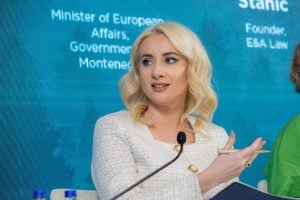
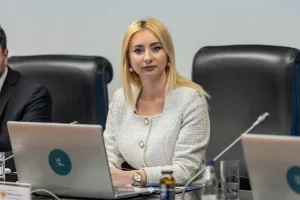
This was stated by Minister of European Affairs Maida Gorčević in an interview with Bankar, responding to the question of whether the Emirates received privileged treatment that could be contrary to Montenegro’s obligations under EU market competition rules, and whether these agreements could jeopardize the country’s EU path.
“Such an Agreement will not only fail to endanger the path to the EU, but investments from the UAE can contribute to the functionality of a market economy – a key criterion for EU accession – and additionally increase employment and public revenues, which in the long run can strengthen Montenegro’s negotiating position and accelerate convergence with EU economies,” said Gorčević.
She added that such bilateral agreements are used in the EU to attract capital to areas that are not sufficiently covered by standard market mechanisms.
“Agreements with third countries are a legitimate right of every sovereign state until it becomes a full EU member. What matters is that they are transparent, do not violate fundamental human rights, and do not create closed, discriminatory regimes – and this agreement creates none of those problems,” said Gorčević.
She recalled that in this context, trade negotiations between the EU and UAE were launched last week to reach a special trade arrangement, which directly supports the legitimacy of the Government’s and Parliament’s decision to valorize its resources through economic cooperation with this Gulf country.
In the interview, Gorčević also spoke about the impact of European integration, the EU and IPA funds, the “Geopolitical Union,” and the personal contribution of her ministry’s work.
How can European integration specifically help the underdeveloped northern region?
European integration opens numerous opportunities for the northern region through access to significant EU funds for infrastructure development, modernization, and support for the local economy. Gradual alignment with European regulations will create a more stable legal framework, which increases investor confidence and opens the door for investments in areas such as tourism, green energy, agriculture, and food processing.
Through targeted investments and programs like IPARD, the north can activate its underutilized resources and stop decades-long migration. By strengthening institutions, local communities will be empowered to independently plan and implement projects that meet their needs. In short, European integration is a chance for more balanced development of the country and the creation of a sustainable perspective for the citizens of the north.
By joining the EU, we become part of the single market, which enables the free flow of capital and easier access to European funds. This will accelerate the development of local projects, including the construction of transport and digital infrastructure, the improvement of the education system, and the encouragement of employment, especially among youth and women.
Which projects are currently being implemented and funded from IPA funds, and what impact will they have on the local economy?
We are currently in the implementation phase of numerous projects financed from the IPA III financial perspective, covering the period from 2021 to 2027. Within this financial perspective alone, over 305 million euros have already been allocated. This funding has been earmarked for ten concrete projects, three budget supports, as well as additional funds for operational programs in the fields of employment and environmental protection, support for agriculture through the IPARD III program, and one of the largest investments – the construction of the Mateševo–Andrijevica highway section, for which 100 million euros has been secured.
What is particularly important is that all these projects have a very concrete and direct impact on the local economy. New jobs are being created, infrastructure is being modernized, and public services are being improved. The highway, for instance, will significantly improve the connectivity of the northern part of the country, which means better access to markets, more opportunities for local businesses, attracting investors, and strengthening tourism. These are changes that people can feel in their daily lives – and that is, ultimately, the purpose of European funds.
The European Union recently transferred almost 27 million euros to Montenegro as part of the Growth Plan, and a total of 383 million is expected over the next two years. Can you specify which concrete reforms will be financed with these funds and how citizens will feel the direct benefits? How will this impact infrastructure development in Montenegro?
Within the first tranche, about 12.5 million euros goes in the form of budget support, and the rest is intended for three important infrastructure projects in the energy sector, which are being implemented through the Western Balkans Investment Framework (WBIF). These involve improving the electricity network – including the construction of a transmission line between Herceg Novi and Vilusi, modernization of substations, introduction of the SCADA system for better control of the distribution network, and the construction of a large substation in Brezna.
These investments are important because they directly contribute to better and more stable electricity delivery, reducing losses, and greater energy security, especially in municipalities in the north and southwest of Montenegro, where citizens most often suffer the consequences of outdated infrastructure.
As for the bigger picture, the funds from the Growth Plan will also be directed toward reform measures that will accelerate the digitalization of public administration, improve the education system, facilitate business start-ups, and enhance the labor market. Our goal is for each reform measure to have a tangible result – for example, for citizens to obtain documentation faster and more easily, for young people to find jobs more quickly, or for entrepreneurs to have simpler procedures. In short, the European path is to become visible and tangible through everyday positive changes.
By 2027, Montenegro will have the opportunity to receive up to 383 million euros from the Reform and Growth Instrument for the Western Balkans, in exchange for progress in reforms in the areas of rule of law and fundamental rights, renewable energy sources, the digital economy, human capital, and private sector development. Is there a realistic chance that Montenegro will meet the conditions to receive this money?
Yes, I believe there is a realistic chance for Montenegro to meet the conditions and utilize the 383 million euros from the Reform and Growth Instrument for the Western Balkans by 2027. The key lies in the fact that the Reform Agenda for the Growth Plan is aligned with the obligations from the negotiation process that the Government plans to complete by the end of 2026. We are fully aware of how important this support is – not only financially, but as an opportunity for the comprehensive modernization of our society.


The Reform Agenda is our roadmap – precise, concrete, and measurable. It encompasses key areas: the rule of law, green energy, digital economy, human capital, and the development of the private sector. These are not abstract topics – these are matters that directly affect the life of every citizen: better judiciary, higher quality education, higher wages, safer energy, more investments, and jobs.
What is important to emphasize is that the payment system for these funds operates on the principle – the more we do, the more money we receive. This means there is no blockade if a measure is not implemented on time; instead, the funds are paid out proportionally, with an opportunity to fulfil the remaining measures later. And the obligations we have are self-defined – there are 130 of them, and each ministry knows exactly what its task is.
I believe that with full political will and coordination, we will succeed in implementing them. This is a unique opportunity not only to draw significant funds but also to bring about substantial change, to make Montenegro a functional, modern, and fully European state in every sense of the word.
How does the Ministry monitor and control whether European funds are spent transparently and efficiently?
The Ministry of European Affairs plays a key role in monitoring how European funds are spent – not only to ensure they are spent properly but also to ensure they produce real results. Precise control mechanisms have been established, fully aligned with European standards. This means that every step, from planning to project implementation, is closely monitored.
Controls are carried out on multiple levels. We have internal procedures, as well as independent audits and external monitoring conducted by specialized bodies. There are also regular reports, on-site checks, and digital tools that help us quickly identify any irregularities and respond promptly.
Transparency is particularly important to us. All information about how funds are spent is publicly available because we want citizens and our European partners to have confidence in the system. After all, we are talking about public money, and we, as a state, have the responsibility to spend it wisely, responsibly, and in the interest of the citizens. This is not just a matter of procedure, but also of our credibility as a future EU member state.
How much funding has been drawn from pre-accession (IPA) funds so far, and how would you assess the use of these funds?
Since Montenegro started using European funds through IPA – that is, from 2007 until the end of 2024 – a total of €789 million has been allocated to us. These funds have been invested in our development, institutions, infrastructure, education, employment, and energy. We have used them through three seven-year financial frameworks – IPA I (2007–2013), IPA II (2014–2020), and IPA III (2021–2027).
In the first phase, IPA I, we drew about €205 million and implemented more than 100 projects – from support for public administration and the judiciary to the development of local infrastructure. During the IPA II period, which lasted until 2020, €279 million was allocated. These funds were used to implement 33 projects and three direct budget supports, as well as to prepare major infrastructure projects through the Western Balkans Investment Framework.
We are currently in the IPA III phase, which lasts until 2027, and within this framework, more than €305 million has already been allocated. In addition, it is important to emphasize that the funds from the Growth Plan, which are currently being implemented, are additional and not included in this amount.
Looking at the overall picture, we can say that Montenegro is making very good use of the available funds, especially in comparison with other countries in the region. Of course, there is always room for improvement – especially in terms of efficiency and speed of implementation. But what is crucial is that we have a clear system, experience, and the will to translate every European investment into tangible benefits for citizens.
How much EU funding has Montenegro failed to absorb in the past (approximately) five years, and what are the most common reasons for that? In which business sectors could Montenegrin citizens benefit the most from IPA and EU funds, but currently are not using them?
The contracting of projects from the current financial perspective IPA III (2021–2027) is still ongoing, so we cannot speak about precise amounts that we have failed to absorb. For example, for projects from the IPA 2021 programme, the contracting deadline lasts until December 2025. So, we still have time to implement the planned projects.
At this moment, Montenegro is implementing projects from four annual IPA programmes – 2021, 2022, 2023, and 2024 – for which the European Commission has allocated more than EUR 131 million. These funds are directed towards 10 specific actions and three important budget support programmes related to public administration reform, border management, and mitigation of the energy crisis.
In addition, we have two major operational programmes for the period 2024–2027 concerning the areas of environment and employment, for which another EUR 66 million of non-refundable EU funds have been allocated. In parallel, the finalisation of the IPA 2025–2027 programme is underway, for which the European Commission has allocated EUR 45 million. Its adoption is expected in 2025. There are also funds for IPARD III – nearly EUR 82 million for Montenegrin agriculture, of which EUR 63 million is non-refundable EU assistance. Moreover, in July 2024, under the Economic and Investment Plan for the Western Balkans, a financing decision was adopted for a EUR 100 million grant from IPA III funds to support the construction of the Mateševo–Andrijevica section of the Bar–Boljare highway.
When it comes to where our citizens could gain even more benefits, definitely in agriculture. Although we have many interested users, there is still room for more people, especially small and medium farmers, to apply and make use of support through IPARD, particularly considering that these funds have been significantly increased in the IPA III perspective. Also, there is great potential in the areas of energy efficiency, digitalisation, and youth employment, for which more and more funds are now becoming available.
Essentially, the challenges in absorbing funds are most often of a technical nature – a lack of good project documentation, capacity issues in administration, or delays in preparation. That’s why we are working on strengthening the system and educating beneficiaries, so that Montenegro can make the most of every opportunity offered by European funds.
What measures does the Ministry of European Affairs plan to take to increase the absorption of EU funds, considering the frequent challenges in administrative capacity and project preparedness? What are you doing specifically to ensure that local governments and small businesses have better access to EU funds?
At the Ministry of European Affairs, we see where the biggest challenges lie in using EU funds – most often a shortage of professional staff, especially at the local level, and inadequately prepared projects. That’s why we are focusing on concrete measures to remove those obstacles.
First and foremost, we continuously organise training for officials from the state administration, local governments, civil society, and the private sector. These are not just theoretical trainings – we conduct practical workshops that cover project writing, budgeting, grant management, and all key EU procedures.
Next, we have introduced a network of national contact points – people who are available to help anyone who wants to apply for funding. Whether it is a municipality or a small entrepreneur, they can receive technical support and the advice they need to prepare a quality project.
We encourage inter-institutional cooperation and pay special attention to local governments because we want balanced development across all parts of Montenegro. We encourage them to cooperate, but also with civil society and the private sector, to jointly apply for larger and more complex projects with a stronger developmental impact.
We are also working on digitalising processes – introducing tools that enable easier and faster communication with institutions, better monitoring and oversight of funds and projects. All this shortens the time and reduces errors.
Our goal is to create a functional and sustainable system that will allow better use of available funds, as well as balanced development of all regions of Montenegro through European projects. Absorption of funds is not just a technical issue but a developmental one, and that is why we strive to provide support where it is most needed.
Can Montenegro count on additional EU funds in the coming years, considering the new “Geopolitical Union” approach that promises stronger inclusion of the Western Balkans even before formal membership?
Absolutely – as the most advanced candidate in the enlargement process, Montenegro can count on additional support from EU funds in the coming years, not only through existing instruments but also through new initiatives stemming from the concept of the “Geopolitical Union.” This new EU approach implies stronger inclusion of Western Balkan countries even before full membership, through concrete policies, access to the single market, and, importantly, additional financial support.
Montenegro, as the country furthest along in negotiations, has a chance to lead in the use of these new instruments. The European Commission has already clearly shown through the Growth Plan for the Western Balkans that it wants to speed up the integration process and reward reforms with concrete funding in sectors that bring the greatest benefit to citizens: the rule of law, green transition, digital economy, human capital, and employment.
The Ministry of European Affairs actively monitors these processes and is already taking steps to ensure that Montenegro is ready to take advantage of additional funds, either through existing mechanisms such as IPA III or through new forms of support. We are also intensifying dialogue with EU institutions and partner countries in the region to ensure that Montenegro is recognised as a credible and prepared partner in this new geopolitical framework.
Of course, access to these funds also depends on us, on how ready we are to implement reforms and effectively use what is already available to us. That is precisely where the Ministry plays a key role – to ensure system readiness and to encourage all actors, from local governments to the private sector, to be part of that process.
How aligned is domestic legislation in the areas of competition, state aid, and public procurement with EU standards, and are domestic investors at a disadvantage because of it?
In the areas of competition, state aid, and public procurement, Montenegro has achieved a significant level of alignment with the EU acquis. In terms of legislation, the framework is largely harmonised with EU standards, especially through the adoption of numerous new laws prepared in cooperation with European experts. However, legal harmonisation is only the first step, as effective implementation in practice is equally important. Challenges still exist, particularly regarding the capacities of institutions responsible for oversight and control.
That is why the Ministry of European Affairs, in cooperation with the Ministry of Finance and the Agency for the Protection of Competition, is working on strengthening institutional capacities, increasing transparency, and informing economic operators. In this context, guidelines are being prepared that will further raise awareness and facilitate the understanding of rules in the areas of competition and state aid.
As for domestic investors, the goal of EU rules is precisely to ensure equal conditions for all market participants, both domestic and foreign. In that sense, proper implementation of EU standards should not place domestic investors at a disadvantage, but rather create a fair and transparent market environment. The Ministry of European Affairs, in cooperation with competent institutions, will continue to monitor progress and provide support to ensure full application of EU rules while maintaining the competitiveness of the domestic economy.
Does the Ministry have analyses on how much GDP, employment, or foreign investment would increase in the first 5 years of EU membership?
The Ministry is familiar with numerous studies on the economic convergence of new EU member states after accession. Countries like Poland and Romania were at about 40–50% of the EU standard of living and, over five years of membership, despite the 2008/9 crisis, grew by around 11 percentage points and reached 60–65% of the European standard. Montenegro is at a similar level of development.
Additionally, EU accession provides direct financial benefits, and direct access to the European Structural and Investment Funds will create an opportunity for Montenegro to use resources for specific projects that, based on the experience of other member states from recent enlargement cycles, are on average 6–8 times higher than the annual allocation amounts during the pre-accession period. Funds available through the ESI Funds average up to 4% of the recipient country’s GDP annually.
In Montenegro’s case, these funds will be used to implement significant development projects in various areas. Considering the multiplier effect of investments on GDP and overall economic development, it is clear that such a substantial inflow of investments from EU funds (along with the positive effects of membership in other chapters) will intensify Montenegro’s economic growth in the post-accession period. The experience of member states from previous enlargement cycles indicates that GDP growth solely on this basis reaches up to 5 percentage points.
What do you consider your contribution and success during your term as head of the Ministry of European Affairs?
The right time for such a question will be at the end of my term, when I can provide a more comprehensive overview of what was planned and achieved. However, what I can already say is that I am sincerely committed to teamwork, because European integration is not the task of the Government or a single institution, but a joint effort of the entire society.
In this process, the Ministry of European Affairs, as coordinator of the negotiation process, can only be successful if there is cooperation and a shared vision. That is why I deeply value the contributions of all employees in the Ministry, as well as colleagues from other departments with whom we work daily to build Montenegro’s European future. I believe in the power of collective work, and I am proud to be part of a team that is dedicated to the same goal.
We continue to work on achieving major and historic steps in Montenegro’s European integration, primarily the completion of the entire negotiation process by the end of the coming year, followed by creating the preconditions for full membership by the end of 2028.
Our goal is to build Montenegro into a modern, prosperous, and well-governed country, fully aligned with the highest European standards, where European integration brings real and visible improvements in the quality of life for every citizen.
(Bankar.me)