



Mohamed Alabbar is a global entrepreneur whose influence extends far beyond the real estate sector. He leads multiple companies that span e-commerce, hospitality, and retail. As the founder of Emaar Properties and Eagle Hills, he is also the driving force behind Noon.com and Americana Restaurants. Mohamed Alabbar has built a business empire valued at more than $50 billion.
What defines his approach is a strong commitment to preserving local culture and heritage while enabling economic transformation. In every market he enters—from the historic districts of Cairo to the Belgrade waterfront—he brings his business philosophy while maintaining cultural identity. His projects incorporate traditional architectural elements, support local artisans, and create spaces that elevate regional heritage, offering modern amenities and economic opportunities.
This philosophy has made him a reliable partner for governments that aim to advance without sacrificing their cultural soul. Whether developing a new city center or revitalizing a historical neighborhood, Alabbar’s companies prioritize hiring local talent, partnering with local businesses, and creating destinations that residents are proud of and tourists are drawn to.
His success proves that economic growth and cultural preservation are not mutually exclusive but are, in fact, aligned elements of sustainable development.
When and with what vision did Mohamed Alabbar’s development journey begin?
I’m not sure it was a vision, but you know, I think we as human beings are influenced by many things in life. And I think that when they touch us in a good way, that’s a blessing. My whole life, I’ve admired vast, beautiful lands and landscapes. Deep down I used to wonder: could my people live like that too? Could this happen in my town, my country? It started as just a thought. And as I got older and progressed, I tried one thing—and it worked. I had a lot of support. My government backed me, people believed in me, the economy was doing well. So many factors aligned—and God was there too. And then it became a habit—to believe that we, as human beings, deserve a good life.
Your career includes many achievements, and we’re sitting across from the Burj Khalifa, the tallest architectural structure in the world, which is your project. What’s the secret behind that success?
I don’t know if there’s a secret, but when I was young, I was probably scared. I didn’t think I could do any of this. But gradually, with the help of good people, friends, colleagues, and family—it happened. If you’re in the right place—and you must be in the right place—then you say: I can be brave. Like when His Highness wanted me to build the Burj Khalifa. I originally designed a 90-story building. But his vision was much bigger. He said: no, that won’t do. If it’s not the tallest in the world—don’t even come to me. Don’t bother. So, you also need a leader who pushes you forward. I truly believe we owe it to our families, society, country, neighbors, and friends—to help each other progress in many ways.
Many of your employees say you are a visionary leader and that it’s a pleasure to work with you. What’s the secret behind your good relationship with your team?
Well, I’m not sure everyone likes working with me, because I’m not an easy boss. I’m fast. I demand quality. I demand good design. I demand excellent customer service. I demand everything. I always tell my employees: you must be like artists. When we’re doing development, we need to understand roads, landscapes, playgrounds, music, art, food, lighting, hotels, shopping, wellness, fountains, opera houses, fireworks… I mean, you need to know everything. And I truly believe that if you love what you do, it’s easy to learn. But if you don’t—you won’t get far. So, I have a great team.


Employees also say that when you assign them demanding tasks, you always explain why, and that helps them complete the job more easily. Is that true?
They’re all young people. I’ve made more mistakes in life than all of them combined. And I’ve learned from those mistakes. But at the same time, the agony I carry is that, at my age, I’m under pressure. People expect me to do great things, great projects, to ensure a high-quality life, and to be responsible. Even the government has placed a great burden on me because they trust me. That puts tremendous pressure on me—I don’t want to disappoint anyone. I must apply the best available technology. So now, after everything I’ve done, I’m under pressure that—whatever I do—it must be even better.
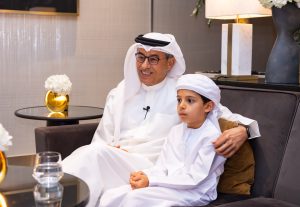
Now, after all your success, how would you advise your grandson, little Mohamed, or young people in general?
I would tell him that if God gives him a positive, open mind, he should just work hard and be honest about what he does. He will make mistakes, but he must always move forward because the world is moving forward. I believe that our society, we as human beings, our countries, cities, and citizens—all have a duty to progress. Otherwise, we’ll be left behind. That’s how I feel—we must keep up with the world. And I believe that has become a habit in how I do business. I’ve tried it in many cities, and it has worked well. So that’s truly a good formula. Be positive. Work really hard. Be honest about what you do. And you must be brave.
You hosted a delegation of Montenegrin media here in Dubai, where you’ve completed some of your biggest projects: Burj Khalifa, Dubai Hills, and Dubai Mall. When and how did the idea emerge to invest in Montenegro?
When I looked at your coastline, the size of your country, your population, your GDP, the share of tourism—I said: this can go much further. I looked at wage levels, hotel prices in certain areas… For example, 120 euros a day at the seaside—well, you can’t be on a beach for 120 euros, it should be 400. There’s so much to do, but it’s not about money. It’s about social progress, moving forward. It’s about national pride when the economy grows. I looked at your data. And by the way, 20 years ago—Dubai was the same.
How and where do you see the future of your investments in Montenegro?
Well, the country is very interesting. It’s untouched, has incredible potential, beautiful people, a beautiful land—whether the coast or the mountains. And of course, it’s located in Europe. What I’ve realized is that Montenegro is underestimated. There’s so much room for growth. I like some of the changes happening in the country. I’m currently exploring several opportunities. If something comes up and I get the chance—I promise, I’ll try to do a great job.
You mentioned you would collaborate with some local investors. Did you have anyone specific in mind?
Well, not really. But I believe—and you may have noticed—that here in Dubai, I have about 40,000 shareholders in my company. And in Egypt, I have close to 11,000 local shareholders. So, I think it’s good for me, as a foreigner coming into a country, to invest alongside the local people. So, in any city where I have a project, I’d love to invite local businesspeople to join me.
Let’s touch on topics that stirred public attention. Most local beaches were returned to local leaseholders. What’s happening with the one in Ulcinj you leased? Are you preparing it for the season?
No, I think we’re currently in discussions with someone. I believe something is being worked on regarding that remaining beach. Most likely, an operator will take it over. I think something is happening on that matter right now.
Are you considering Buljarica Beach for your investments?
I’m exploring the entire coastline. I’m also exploring mountain resorts. I’d really love to build a good summer resort in Montenegro.
When can we expect you?
I hope I’ll find something in the next three months. Or at least a sign that we could do something.
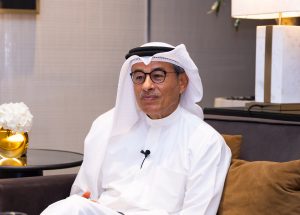
Are you disappointed by the treatment you’ve received and the allegations from parts of the NGO sector accusing you of money laundering? How do you view the Government’s steps in your case?
I’m not disappointed. But what completely changed my view of the situation was that, when I visited Montenegro for the second or third time and walked the streets, people recognized me. They were so kind. They welcomed me… They said: I hope you stay longer, I hope you do something in our country. I’m a very emotional person. I said: I will do something in this country. I don’t care if people have doubts. They have every right to. But—you must investigate me if you think I’m doing something wrong. Check me first. Don’t just talk negatively. Do your research.
But the good news is that now I think there are only two or three people left speaking negatively about me. Most people in Montenegro were kind to me, they gave me a warm welcome and were excited. And that means a lot to me. I hope I won’t disappoint them.
After everything that happened in the Montenegrin public, would you have any advice for new investors or perhaps for the Government when it comes to announcing major investments?
I have no advice for anyone. I think this was my situation. I have to manage my own business. And all I can say is that I’m truly excited that people are welcoming me. That’s why I’m seriously looking for opportunities and I will do something in Montenegro. I promise you. I promise! I will do it. And you know, I’m getting many proposals from many cities, from many businesspeople. So, I absolutely should do something. And regarding what the media reported—I think it actually motivated me even more, because I believe your country is very interesting and that I must do business there. I will create something so beautiful that people will say: wow, that Mohamed from Dubai—he was a good man.
In one of your previous interviews, you mentioned the possibility of establishing a leadership training center. Do you plan to do something like that in Montenegro?
Leadership training is close to my heart because I went through such a program myself and, well—I guess I became someone special. So, I’d really love to replicate that in every country I operate in. My team in Albania is now first-class professionals, but we trained them for three or four years. My team in Serbia is also first-class. So, wherever we go—the people we bring into our team, we train them. We bring them to Dubai, take them to other countries. I think it would be very interesting to have a training center for technology and hospitality in Montenegro.
If you were to take your family to Montenegro on holiday, where would you go—coast or mountains?
Well, you know, my mother wants to go to the mountains. We recently planned a trip. As Arabs, you know, we prefer the mountains because summers are very hot where we live, as you can see. So, we run to cooler places, and you know—some of the towns I’ve seen in your country are only an hour from the capital. It’s just incredible beauty, amazing people, the climate… Though the Montenegrin coast is also incredible.