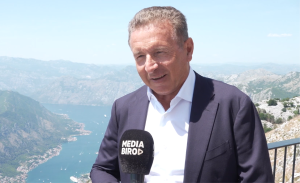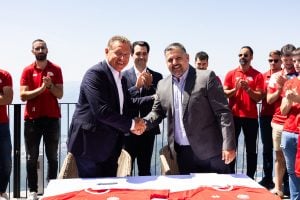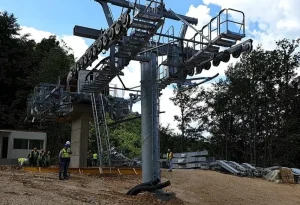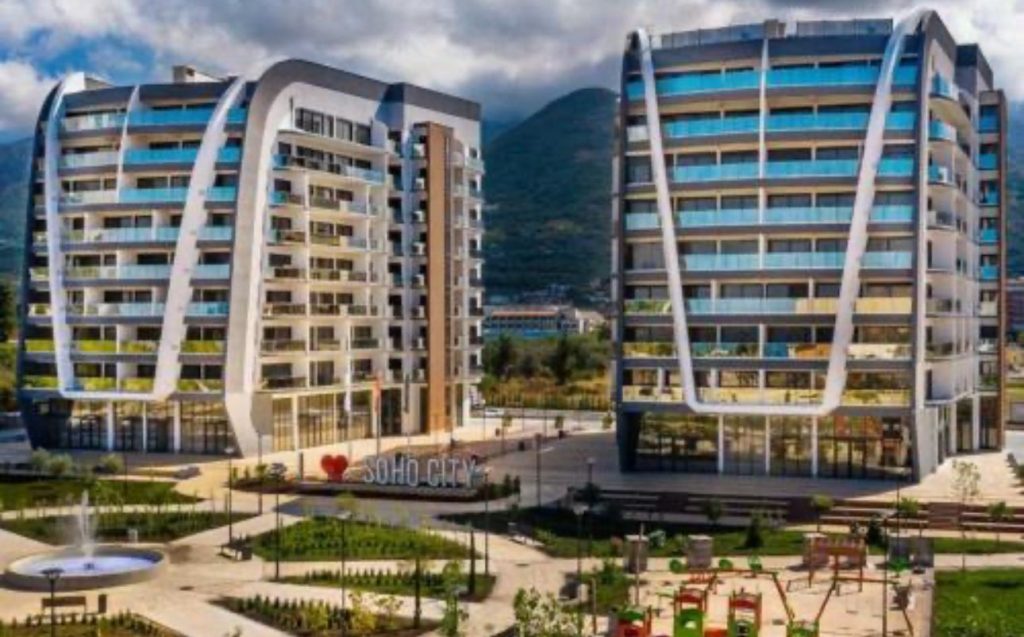

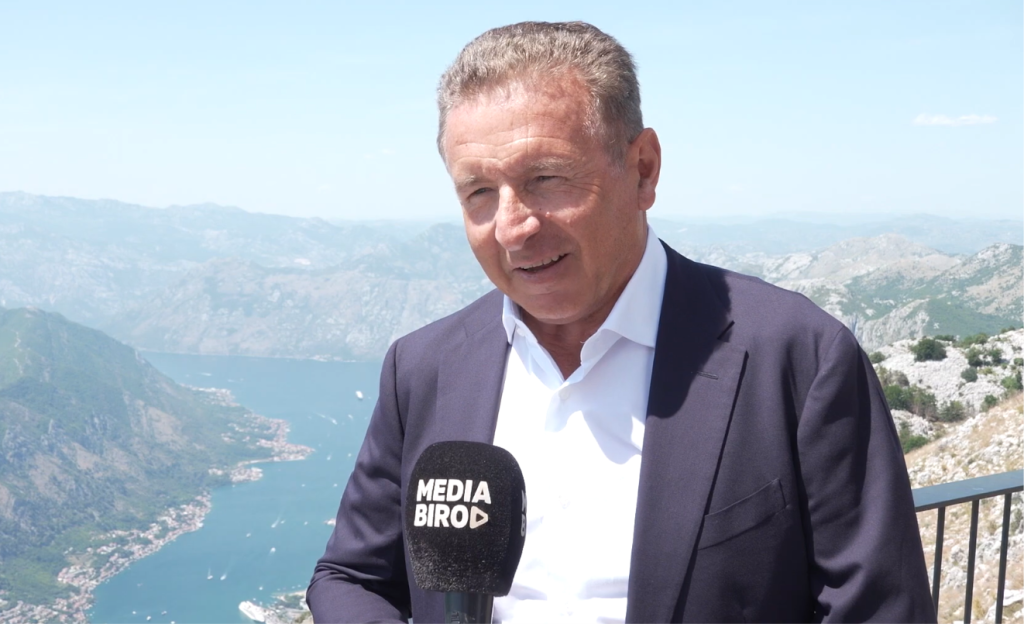


From an equipment supplier to a long-term investor, LEITNER has made one of its most significant advances in Southeast Europe through the Kotor–Lovćen Cable Car project. Martin Leitner, Chairman of the Board of Directors of XExperience and co-owner of LEITNER, says that stability, reliable local partners and an efficient public administration are the key reasons why he regards Montenegro as a country worthy of further investment. Following the connection of Kotor and Lovćen, the next ambition is to extend the route towards Cetinje, while also developing projects in the fields of skiing, hydropower, wind energy and sustainable mobility.
Bankar: Following many years of successful cooperation in Montenegro, LEITNER’s decision to become an equity investor in the country marked an important step beyond the traditional supplier–client relationship. What convinced you that Montenegro was not merely a market for individual projects, but a country worth investing in over the long term?
Leitner: When I first came to Montenegro, I was amazed by its natural beauty. It has a magnificent coastline, but also majestic mountains and enchanting lakes. Its natural environment is truly exceptional. When I travelled up this road to this location and heard that there had previously been plans to build a cable car, I immediately thought that we had a unique opportunity before us. Naturally, as an Italian, investing in Montenegro was not a straightforward decision. We therefore looked for a local company that could become our partner. I believe that, together with XEnergy, we have formed an excellent team. After several years, we succeeded in opening this impressive cable car, which has become an iconic project for us. At the same time, it is a world-class reference installation, built in a truly unique location.
Bankar: From your perspective as a representative of a global infrastructure company operating in dozens of countries, how would you describe the experience of investing in and implementing major projects in Montenegro? What worked well, and what could be improved to attract more international investors?
Leitner: We were deeply impressed by the speed with which the project was completed. Delivering such an undertaking within such a short timeframe was far from simple, particularly given the absence of an access road and an electricity supply, as well as the project’s immediate proximity to a national park. Projects of this kind require the support of both the public administration and political institutions. Without that support, projects can be discussed, but bringing them to fruition becomes extremely difficult. Our company is headquartered in Italy, and we have invested in numerous projects across the Alps. Frankly speaking, obtaining all the necessary permits for projects of this kind has often been considerably more complicated there than it was in Montenegro. Every year, we install approximately one hundred cable car systems around the world, from New Zealand and Canada to South America. Nevertheless, this project remains one of our most recognisable achievements. I see considerable potential for similar projects both in Montenegro and throughout the Balkans.

Bankar: The Kotor–Lovćen Cable Car has become one of Montenegro’s flagship tourism infrastructure projects. Looking back at its implementation, what made this public-private partnership successful, and what lessons could Montenegro apply to future infrastructure investments?
Leitner: We were very fortunate to find an ideal and highly motivated partner. I was also impressed by the level of quality we achieved together. I am referring not only to the cable car itself, but also to all the accompanying facilities. The restaurant and viewing platform are truly impressive. Compared with similar projects in the Alps, I would say that they are of an exceptionally high standard. Further development also lies ahead. We are discussing the next phase, which would connect the upper station with Cetinje. This would also be highly significant for Cetinje, as it would provide the city with improved transport links in the future. Montenegro also has considerable potential for the development of skiing. There is already a ski resort where we have completed other installations. For this reason, I also regard Montenegro as a promising market for our company.
Bankar: Around the world, cable cars are increasingly becoming part of sustainable mobility systems rather than serving exclusively as tourism infrastructure. How do you assess Montenegro’s potential within this transition?
Leitner: We built our first urban cable car approximately two decades ago. At present, for example, we are constructing three additional lines in Mexico City. We also delivered one of the world’s most successful urban cable car systems in that city. It connects two metro stations using a gondola system similar to this one, but with a total of seven stations. Every day, we transport approximately 75,000 people from their homes to their workplaces and back. The system operates from 5 a.m. until midnight and achieves an operational availability rate of 99.8 per cent. European policymakers are also increasingly recognising that cable cars are not only a sustainable solution, but can also contribute effectively to addressing traffic and transport challenges. I believe that opportunities for the development of urban cable cars are gradually emerging in Europe as well. Why should such a solution not be introduced here? The roads are heavily congested, and one day a cable car system could help improve the quality of public transport.
Bankar: When speaking to international partners and investors about Montenegro, what do you consider to be the country’s greatest competitive advantage? Which single reform would be most important for encouraging a greater volume of long-term investment?
Leitner: I consider Montenegro to be a very stable country. It is not only about its beauty, but also about the people I have met over the past several years, people who can be trusted. Everything that was agreed was also honoured. For that reason, my experience with Montenegro has been exceptionally positive. When I speak with friends and recommend holiday destinations, as well as when I speak with people considering investment opportunities, I can recommend Montenegro as one of the Balkan countries where I have confidence in the people. I believe that Montenegro will become a member of the European Union sooner or later, and I consider it well prepared for accession.
Bankar: LEITNER is recognised worldwide for helping shape the future of sustainable mobility. Looking ten years ahead, what role could Montenegro play in LEITNER’s long-term vision for Southeast Europe?
Leitner: We are active in several different sectors, not only in the cable car industry. We are involved in hydropower, wind energy and snowmaking systems, for which there could, for example, be demand in Kolašin. Our company operates in numerous fields in which Montenegro could become an important future market. Our relationship with our partner extends beyond business cooperation. Together with XEnergy, we are investing in several projects. I believe that this is only the beginning and that we have a successful shared future ahead of us.
Bankar: At this year’s Real Estate Conference, which we organised, we heard the message that Montenegro could become the happiest country in which to live and invest. What is your view?
Leitner: Based on our experience, my message is simple: trust the people, have confidence in your decisions, and significant development opportunities will open up before you. I have absolutely no doubt about that.