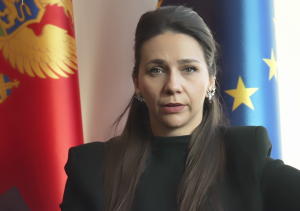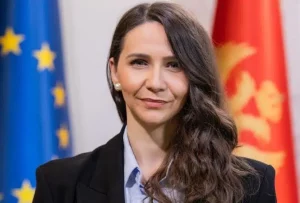

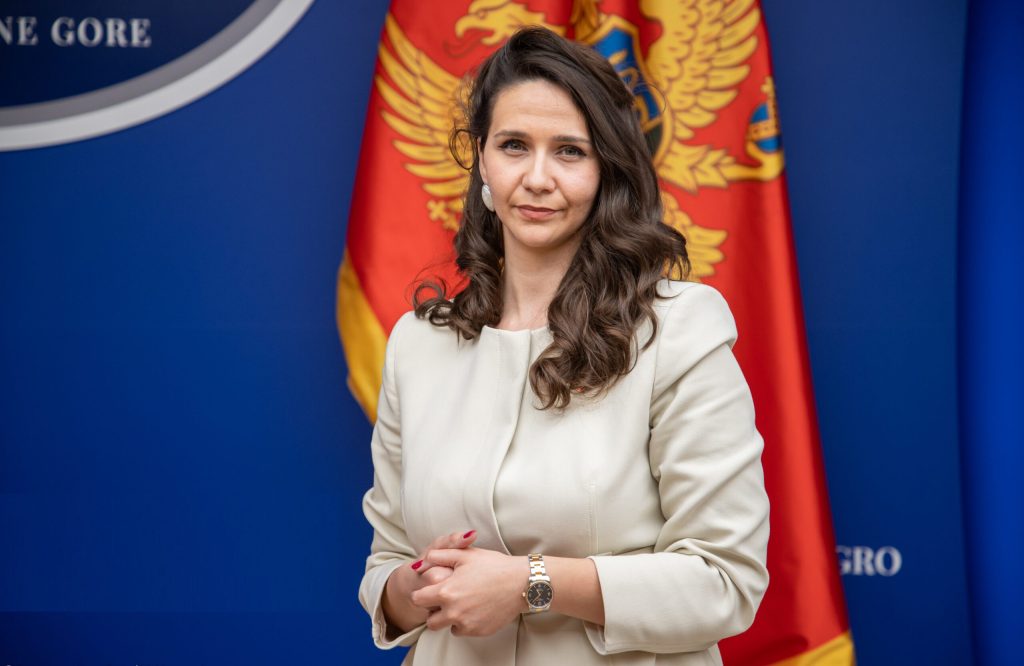

- “We expect tangible investment implementation, primarily through partnerships with France, Hungary, and the United Arab Emirates, but also with Austria, the USA, and Italy, where projects are already planned. Our key focus is on the sectors of tourism, logistics, energy efficiency, and transport,” said Minister of Public Works Majda Adžović in an interview with Bankar.
- Adžović reminded that, during the first 100 days of the Ministry’s work, more than 30% of the annual capital budget was executed, with a focus on local needs and infrastructural connectivity.
- She noted that by the end of 2025, the Ministry plans to complete over 20 infrastructure interventions across the country – ranging from school, health centre and cultural facility renovations to major transport routes – all of which contribute to national development and improve the quality of life and work in local communities.
- Through a new model of cooperation with municipalities and international partners, the Government of Montenegro is aiming for sustainable and long-term growth, she stated.
Almost 100 days since your ministry was formed. How do you assess this period and what were the main activities related to the implementation of the state and local capital budget?
As you know, Montenegro has for the first time established a Ministry of Public Works. The first 100 days were therefore marked by an intense pace of work focused on consolidating all planned activities, redefining priorities in line with realistic budget frameworks, and creating a functional and responsible coordination system with local governments.
Our activities focused on accelerating the implementation of inherited projects, as well as preparing new investments. During this period, we executed more than 30% of the capital funds planned for the entire year, which I consider an excellent result, given the challenges of complex tender and technical procedures. We decided to prioritize infrastructure projects that directly improve connectivity, energy efficiency, and the quality of public services at the local level – which has already yielded visible success.
As a minister in office for just over three months, which key future projects can you present with clear deadlines? What has already started and what do you plan to complete by the end of 2025?
As I previously mentioned, I’m very satisfied with the Ministry’s operational tempo, despite the fact that many procedures were already underway when the ministry was established. We have already initiated the implementation of several capital projects related to the modernization of road and utility infrastructure.
By the end of 2025, we plan to complete over 20 infrastructure interventions across the country – from renovations of schools, health centres, and cultural institutions to crucial road routes that further the country’s development and create conditions for better quality of life and work in local communities. The deadlines for the most important projects are clearly defined through dynamic quarterly plans, which are published and available to the public to ensure full transparency – a cornerstone of this Ministry’s work.
In regard to the interstate agreements signed in recent months, what are your expectations for the inflow of foreign direct investment, and which country do you expect to see the first project implementations with?
The interstate agreements that Montenegro has signed – or are preparing to sign – serve as instruments to strengthen ties with partner countries and create conditions for closer cooperation in strategic areas. They also aim to attract foreign direct investments from partner countries, in line with our foreign policy priorities.
We expect concrete investment implementation primarily in partnership with France, Hungary, and the United Arab Emirates – where some projects are already underway – as well as with Austria, the USA, and Italy, where projects are planned. Our focus is on tourism, logistics, energy efficiency, and transport. Fundamentally, we aim to create conditions for long-term, sustainable investments, while also strengthening domestic capacities through knowledge and technology transfer.
Regarding the agreement with the UAE – does the government plan to act as a co-investor, and how would that be implemented?
The role of the Government of Montenegro as a potential co-investor in projects under the agreement with the UAE will be defined by a bilateral contract. In this process, the Government will ensure the protection of national interests by guaranteeing transparency, legal certainty, inclusiveness, and effective project implementation. Our priority is to achieve long-term benefits for Montenegro, in full compliance with all legal and strategic frameworks.
You’ve recently said one of your priorities is strengthening transport connectivity through the development of cross-border corridors. Which corridors are being considered and at what stage are feasibility studies?
Montenegro must continue improving the quality and extent of its transport connectivity. As a country where tourism is a primary economic activity – and one that is on track to become the next EU member – we are obligated to enhance this segment to ensure better mobility and facilitate economic activity.
Besides internal transport links, our focus includes corridors of regional importance – especially the continuation of the Adriatic-Ionian corridor, the modernization of the railway network, and the planned development of a cable system to support digital connectivity with the region and the EU. Of course, all this is in addition to the ongoing Bar–Boljare highway project and other current initiatives.

How do you assess the cooperation with the EBRD, and which projects will be implemented in the next 12 months? Are there other financial partners worth mentioning?
The EBRD has been one of Montenegro’s key partners in the development of strategic infrastructure for decades. Our cooperation with the EBRD is active, successful, and aligned with Montenegro’s economic, environmental, and infrastructure policies.
Over the next 12 months, we expect the completion of several large-scale green and digital projects, as well as the launch of the Mateševo–Andrijevica section of the highway. Other key financial partners include the EIB, CEI‑EBRD funds, and multilateral donors through the WBIF structure.
How do you ensure that capital projects are planned and implemented in line with the actual needs of local communities, and how involved are municipalities in this process?
Capital projects are planned and executed based on real local needs through an inclusive and coordinated approach involving all relevant stakeholders – with special emphasis on the role of municipalities.
Municipalities are involved from the start – from identifying needs and defining priorities through public calls for projects to participating in the creation of local development plans. We also hold regular meetings and consultations with municipal representatives to monitor implementation, address field-level challenges in a timely manner, and ensure transparency and efficiency.
This cooperation model ensures that capital projects are not only technically and financially viable but also socially relevant, adapted to the local context, and supported by the community. Such an approach contributes to greater accountability, efficiency, and long-term sustainability of infrastructure and development investments across Montenegro.
One of the recurring challenges in public works is the pace of public procurement procedures. Are you planning any reforms to improve capital budget execution?
The public procurement process in this field is complex and demanding. Montenegro recently closed negotiations on Chapter 5 – Public Procurement – having aligned with the EU acquis and fulfilled the benchmarks. This means we are not in a position to undertake reforms that are inconsistent with what has been achieved.
The key now is to focus on practical implementation – and to train staff at both national and local levels – so that there are no delays in gathering documentation, executing tenders, and implementing procurement projects in this area.
(Bankar.me)